AN INTERVIEW BY NEIL R. COULTER & KRAIG MCNUTT
Bill Hendricks is the Executive Director for Christian Leadership at the Hendricks Center and president of The Giftedness Center. His leadership development began in childhood, as he observed and then worked with his dad, beloved DTS professor Dr. Howard Hendricks. We talked with Bill about what he learned from his dad, and how he counsels people in wise leadership.
HOW DO YOU DEFINE “LEADERSHIP,” AND HOW DID YOUR DAD MODEL THAT?
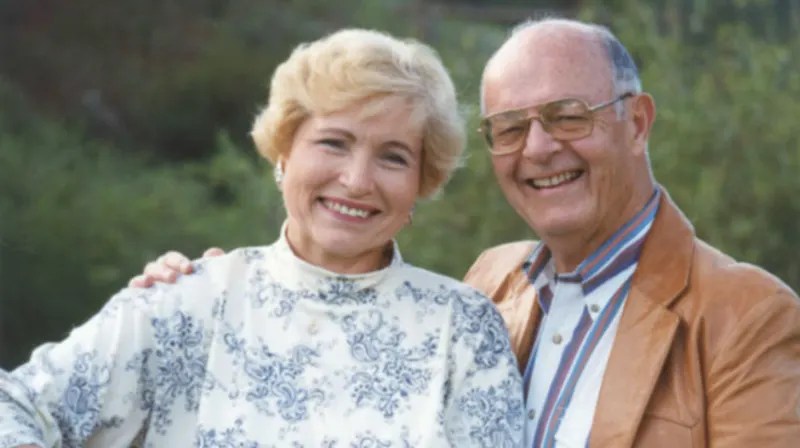
I always think back to the simplest definition of leadership I’ve heard, which I learned from Dad’s friend Fred Smith, Sr. He said, “Followers—that is what leadership is all about. If people are not following you, you are not a leader. You may have the title, but that’s all.”i I look back at my dad’s life and work, and I see that the man absolutely loved teaching; that’s an understatement, actually. He’d say, “I love to teach; I live to teach. I’d teach whether or not they paid me to teach (but don’t tell the seminary that!).” In pursuing the craft of teaching, Dad learned a lot about leadership. He read all the books, met with leaders, and had conversations about leadership everywhere he went. From that perspective, he was obviously an expert in leadership. But he didn’t aspire to the title of “leader.” He didn’t create an organization, manage employees, or intentionally train a successor. Instead, he was a great communicator who happened to focus on leadership.
Taking Smith’s definition of leadership as a model, however, I can affirm that Dad was most definitely a leader. People followed him, regardless of his title or role at any given time. His leadership came from his ability to present impactful, transformational truth in terms that people simply could not ignore or forget. He had a gift for packaging what he said in ways you couldn’t stop thinking about. Many people tell me stories, saying, “I remember hearing your dad speak one time, and he said . . .”—and then they quote him verbatim, despite all the years in between. His leadership continues to resonate.
The lesson for all of us is to focus on the ways God has uniquely gifted each person. When you look at great leaders, you ask, “What causes someone to follow this individual?” For Dad, it was because of his gift as a communicator. For someone else, it’s casting a big vision, or articulating a clear plan or strategy, or caring deeply for people. Your leadership is a function of your own giftedness. It’s possible to have the title of leader, but if no one is following you, then you’re not a leader. Conversely, you might not perceive yourself as a leader and might not have the title, but you look behind you and find that people are following. Leadership is not about titles or positions; it’s about your giftedness and the people who follow you. Play to your strengths and surround yourself with people who have the strengths you lack.
SO YOU’D SAY THAT LEADERSHIP FLOURISHES BEST WITHIN COMMUNITY?
Definitely! Dad was always mindful of his strengths, and he honed those throughout his lifetime. He modeled extraordinary discipline in his work habits, constantly working to fine-tune his craft. He would debrief with his teaching assistants after every class period to talk through what went well and what could be better next time. Everywhere he went, he took a 3×5 card and a blue Flair pen so that he could write down any insights he heard about leadership. And he read voraciously.
But in order to reach audiences beyond the DTS classroom, he needed the strengths of the people around him. Dad loved face-to-face communication, for example, but I don’t think he liked writing at all. For his books, he relied on others, including me, to take his transcripts and recast them as books that still sounded just like him. He was very appreciative because translating his spoken words into written form didn’t energize him.
Another example of Dad relying on others is his radio program, “The Art of Family Living,” which aired from 1980 to 1983. Radio might have seemed like the perfect fit for Dad’s gifts, but it took John Nieder to approach him about it. John was the one who put all the pieces in place to start the program.
The books, the radio program, and other media products became part of Dad’s legacy of leadership, but they came about because of the community of people who applied their own gifts to the work of spreading Dad’s teaching and insights to more audiences. He couldn’t have done all of that by himself, and he was always humble enough to understand that. The people around him were so important—and that’s true of every leader. We’re limited, and the grace of God says we don’t need to do everything better than everyone else.
WHAT ELSE IS IMPORTANT IN THE DEVELOPMENT OF A LEADER?
If you’re identified as a leader at a young age, it can be easy to think, “It must be because I’m better than other people.” So I’m a huge believer in brokenness as a vital stage of any leader’s development. To me, brokenness is when you’re flat on your back, and unless God shows up, it’s over: a serious illness, the death of a loved one, a tragic reversal of fortune. Enduring this brings humility and compassion. A person can be a leader before having that kind of experience, of course, but it’s in those times that you’ll see what that leader is really like.
This is what some writers in the Bible call the crucible experience. Proverbs 17:3 says, “The crucible is for refining silver and the furnace is for gold, likewise the Lord tests hearts.” It’s not a multiple-choice, pass/fail kind of test. Rather, it’s a test to show what’s in your heart. In Psalm 139:23–24, David says, “Examine me, O God, and probe my thoughts. Test me, and know my concerns. See if there is any idolatrous way in me”—and so God responded with something like, “Okay, I’ll do that.” David’s wrongful actions toward Bathsheba and Uriah led him to a crucible that revealed parts of David’s heart that he wasn’t in touch with, desires that had the potential to bring him down. Following David’s actions, God used the prophet Nathan to confront David so that He could deal with it.
For leaders, then, it’s not that you deliberately seek to be broken, but you pray to the Lord, “Whatever I need to see, reveal it to me.” And then be ready to accept a time of brokenness as a revelation of what’s in your heart that you need to address. The self-awareness that results from patiently and wisely enduring a crucible experience is a big piece of leadership. Leaders who are not aware of the good truth and the bad truth about themselves are dangerous. The work I do at the Hendricks Center helps people see what is good and true about them and what is dark and broken about them. That self-awareness helps ensure that people aren’t exporting harmfulness into their leadership influence.
WHAT IS A LEADER’S RESPONSIBILITY TO ENSURE POSITIVE RESULTS?
I always remind people, “You’re responsible for faithfulness in your gift. You’re not responsible for results. God is responsible for results.” God may favor you as a pastor with a large, growing church, for example, but he might favor you with another kind of ministry instead. With joy and gratitude, accept the portion that God gives you. Leadership is organic and particular. You don’t need to compare yourself to others. No one else will reach the people you can reach.
When you think about results in ministry, remember that the early church had no “evangelistic strategy,” as we might conceive of it today. The way the early church brought multitudes of people to faith in Jesus was not because of evangelism, but because of discipleship. We read of few missionaries sent out in the early years of the church, and so we assume that Christianity spread along trade routes. People took the gospel with them as they lived and worked, and this led to conversations about Jesus.
As a leader in a church, then, be careful that you’re not merely entertaining people in order to achieve good numbers. Rather, along with clear preaching of the Word, call people to a serious commitment to Christ in every dimension of their lives. That kind of path demands discipleship, and our problem is that we’re simply not discipling. People need to see leaders living out a life of worshipful obedience, leaders who are humble to say, “I’m dealing with my mess, and I want to invite other people to bring their mess to Jesus, and we’ll see what He does. I’ll walk with you through it.” Discipleship like this will create more leaders, with more people following. And ultimately, we’re all to be followers of the true leader, Jesus Christ.
Originally published on the (DTS) VOICE
 The Fiery Stallion